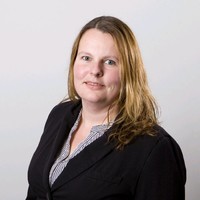
Hamid Aït Abderrahim (BNS) and Anouk Saaltink (NNS) on the first joint Belgian–Dutch nuclear conference, Antwerp, 15 October
Two Societies, One Nuclear Future
On 15 October, the Belgian Nuclear Society (BNS) and the Netherlands Nuclear Society (NNS) come together in Antwerp for the first edition of their joint nuclear conference, an event designed to alternate between the two countries each year. Ahead of the day, one voice from each society was asked what the moment means for the sector, what a shared Belgian-Dutch ecosystem requires and what the next generation should take away.

01 Personal Perspectives
Hamid Aït Abderrahim · bns
Hamid, you’ve spent almost three decades leading MYRRHA; from a research concept to what’s now billed as Europe’s flagship accelerator-driven system. When you look at the nuclear landscape today versus when you started, what’s the single biggest shift that convinces you this is nuclear’s moment again?
I joined BNS in 1986 when I was 25 years old and working at SCK CEN towards my PhD in Reactor Physics. At that time, nobody spoke about “Young Generation (YG)” as such, because the community was overwhelmingly dominated by senior professionals.
I was fortunate to begin my career during a period when experimentation was still the dominant approach in the field, while modelling was just starting to gain importance. My PhD thesis reflected this transition, as it was 50/50 experimental & Modelling work.
I then moved into R&D activities focused on fuel, validation and optimization. In 1996, I embarked on the adventure of creating the MYRRHA project with 2 persons and pursuing the closure of the nuclear fuel cycle, a commitment that has now spanned three decades.
I have had the privilege of serving on various scientific and advisory boards of major nuclear companies such as EDF, as well as start-ups, SMEs, large research institutions such as JPARC, and international organizations, OECD/NEA or IAEA. This has given me a unique perspective on observing the evolution on the strong and genuine willingness that now exists among governments, industry stakeholders, the research and development community, and even Society as a whole to redeploy nuclear energy in countries that already operate nuclear power plants, including some that were once considering phasing it out. At the same time, many newcomers are embracing nuclear energy and deploying it on a large scale, not only for electricity production but also for broader energy applications. Everyone sees again the role of nuclear energy in guaranteeing the security of supply of clean energy.
This renewed deployment of nuclear energy is accompanied by a significant influx of young people entering the field and this is the best guarantee of success in the long run.
Anouk Saaltink · NNS
Anouk, you’re the Head of People & Culture at Urenco. Nuclear is trying to grow fast after decades of being seen as a shrinking industry and workforce is one of the biggest bottlenecks to that. You’re leading that conversation at Urenco from the inside, but you’re also part of the generation the industry is trying to attract. What’s the one thing you think the industry still gets wrong about what would actually bring people like you into it?
I think the industry still spends too much time explaining what nuclear does, and not enough time explaining why working in nuclear is exciting.
Young professionals are looking for work that has impact, but also for work where they can keep learning, innovate and help solve complex challenges. Nuclear sits right at the intersection of climate change, energy security, technology, healthcare and geopolitics. Very few industries offer that combination.
Sometimes we present ourselves as a highly specialised sector. We should also present ourselves as a sector where you can help shape the future. That’s what attracts people of other generations.
02 Meet the Societies
Anouk Saaltink · NNS
With a broader audience joining for this first joint edition, how would you like to introduce NNS to those tuning in? Who do you represent and what draws people to join?
The Netherlands Nuclear Society (NNS) is the professional network for people who are passionate about nuclear technology and its contribution to society. We bring together experts from industry, research institutes, universities, government organisations and the medical sector. Our role is to promote knowledge exchange, professional development and informed dialogue about nuclear technologies and their applications. NNS offers access to a community of experts who are shaping the future of these fields, at a time when the Netherlands is expanding its nuclear ambitions, that community has never been more relevant. The NNS also has a very active group for young professionals in the nuclear sector, the Dutch Young Generation (DYG). The DYG organises many interesting activities and membership is an excellent way of meeting others in the nuclear industry.
Hamid Aït Abderrahim · bns
As Vice Chair of the Belgian Nuclear Society, you’re helping shape an organisation that sits at the intersection of Belgium’s nuclear community, industry, academia and public debate. What role do you think the BNS should play as Belgium enters this new phase of nuclear development and how would you like the society itself to evolve alongside it?
BNS as a learned society has as its main objective the advancement of science and engineering related to the peaceful applications of nuclear energy, as well as all sciences associated with it. As such it organizes events, meetings, conferences, Evening lectures or technical visits for and among its members and their spheres of interaction. With the present relaunch of nuclear energy in Belgium and The Netherlands, I believe that BNS should expand its outreach to societal stakeholders and adopt a more proactive engagement with the media, notably through the development of reference papers on complex issues that are often difficult for decision-makers and non-nuclear audiences to navigate.
03 The 2036 Horizon
Anouk Saaltink · NNS
The conference targets 2036 as a joint Belgian-Dutch milestone. From the Dutch side, what specifically needs to be true of the Netherlands’ regulatory, workforce and supply chain readiness by then for that date to hold?
By 2036, three things need to be in place.
First, the regulatory framework must be predictable, efficient and internationally aligned. Nuclear projects require long-term certainty, and regulators need sufficient capacity and expertise to review and license projects without compromising safety.
Second, we need a strong pipeline of talent. The growth of nuclear energy, nuclear medicine and fuel cycle activities will require thousands of skilled professionals, from engineers and operators to project managers, regulators and tradespeople. Developing that workforce starts today through education, training and international collaboration.
Third, the supply chain must be scaled up and connected internationally. No single country can build a modern nuclear programme alone. The Netherlands needs robust partnerships across Europe to ensure access to specialised manufacturing capabilities, engineering expertise and critical nuclear services.
If those three conditions are met, 2036 becomes much more than a target date; it becomes an achievable milestone.
Hamid Aït Abderrahim · bns
The conference title sets a target of 2036. Why that date specifically? What has to be true about Belgium and the Netherlands’ nuclear systems by then, and what happens if the sector misses it?
The implementation of an industrial strategy, whatever the sector, generally takes at least a decade before reaching full operational maturity. This is by no means unique to the nuclear industry.
Following the decisions of both countries to revitalize nuclear energy in Belgium and to expand its deployment in the Netherlands, the organizing committee, in close consultation with key stakeholders from both nations, considered that by 2036 we should begin to see the first tangible milestones of this renewed nuclear strategy.
04 One Ecosystem, Two Countries
Hamid Aït Abderrahim · bns
Supply chain and skills are usually cited as nuclear’s real bottleneck, not the technology itself. Given your role coordinating EU framework projects, where is the Belgian-Dutch supply chain genuinely ready, and where is it dangerously thin?
As mentioned above, synergies and coordination in bilateral and European R&D are already functioning very well, as are collaborations in education and training and in the field of nuclear medicine.
The new challenge that lies ahead is to work together on large-scale projects, such as the construction of new nuclear reactors.
Such projects require close cooperation between governments, regulators, industry, research organizations, and educational institutions. By pooling resources, expertise, infrastructure, and supply chains, Belgium and the Netherlands can strengthen their respective nuclear programs while building a more competitive and resilient regional nuclear ecosystem.
Anouk Saaltink · NNS
Belgium and the Netherlands have taken very different roads to get here. What does the Netherlands actually need from Belgium (and vice versa) for a genuinely shared nuclear ecosystem?
We do not need identical programmes; we need complementary strengths.
The Netherlands can learn from Belgium’s decades of expertise in nuclear research, advanced technologies and international scientific collaboration. Belgium has built a strong innovation ecosystem around organisations such as SCK CEN and MYRRHA, which offers valuable opportunities for cooperation.
At the same time, the Netherlands brings strengths in fuel cycle technologies, isotope production, engineering, project development and an increasingly ambitious growth agenda for nuclear energy.
Most importantly, both countries need to collaborate on talent development. Engineers, researchers and operators should see the Benelux region as a shared nuclear ecosystem rather than two separate markets. If we succeed in creating that cross-border network of expertise, both countries will be stronger, more competitive and better positioned to deliver their nuclear ambitions.
Hamid Aït Abderrahim · bns
Belgium is rebuilding a nuclear sector it legally committed to closing, while the Netherlands has pursued a steadier build-out that predates the current political mood. Given how differently these two paths started, what does a genuinely joint ecosystem require and what are the risks of assuming convergence where it doesn’t yet exist?
In 2003, Belgium decided to phase out its nuclear power reactors after 40 years of nuclear electricity generation and would no longer allow electricity production from nuclear fission. However, the legislation did not prohibit continuing research and development in the nuclear field nor the construction of new research facilities. This made it possible to launch and continue projects such as MYRRHA. In 2025, Belgium completely changed this situation as the law of banning nuclear energy was completely suppressed.
Today, however, both Belgium and the Netherlands are engaged in a renewed and proactive effort to expand the role of nuclear energy in their energy systems, with the dual objective of achieving sustainable decarbonization and guaranteeing long-term security of energy supply at affordable price.
Given the close ties between our countries within the Benelux framework and the strong historical relationships among nuclear stakeholders on both sides of the border, we consider enhanced cooperation to be a natural evolution. By encouraging and strengthening these interactions, we can build an integrated nuclear ecosystem supported by a larger common market, creating significant benefits for innovation, industrial development, research, and human capital.
05 Inside the Conference
Hamid Aït Abderrahim · bns
The programme mixes high-level keynotes with TEDx-style talks from emerging voices in the field. Why did you want that format specifically, rather than a conventional conference lineup?
We wanted to demonstrate that the nuclear sector is home to talented young professionals who are mastering innovative topics and using modern communication formats, such as TEDx talks, to share their ideas.
Those who work in the nuclear industry are no different from anyone else. They are talented people with a passion for science, technology, and innovation, not extraterrestrials.
Anouk Saaltink · NNS
For someone on the fence about registering versus waiting to see how this first conference goes, what would they be missing by not being in the room on 15 October?
They would be missing the opportunity to help shape the conversation rather than simply hear about the outcomes later.
The nuclear sector in Belgium and the Netherlands is entering a defining decade. Decisions on technology, regulation, workforce development and supply chains are being made now. Events like this are where relationships are formed, ideas are challenged and future collaborations often begin.
Hamid Aït Abderrahim · bns
Nuclear conferences often talk to people who are already convinced. Who is this one actually trying to move? Policymakers, financiers, young engineers and what do you think each of those groups still gets wrong about where the industry stands?
That is true, and it is precisely why, for this conference, we have invited speakers from outside the nuclear sector. We have also reached out beyond our usual circles and networks.
We hope to welcome many participants who are not part of the nuclear community, so that we can engage in open, constructive, and thoughtful discussions in a relaxed and respectful atmosphere.
06 What Success Looks Like
Hamid Aït Abderrahim · bns
This is the first edition, meant to alternate between Belgium and the Netherlands going forward. What does success look like for this one and what needs to happen in that room on 15 October for you to call it a strong start to an annual tradition?
Exchanges between our two countries, driven by this nuclear revival, have been intensifying over the past four years. This is what prompted the leadership of both BNS and NNS to contribute to this initiative. In May 2025, we decided at Executive Committees of both societies to explore the idea of a joint BNS-NNS nuclear conference and agreed to organize it alternately in Belgium and the Netherlands each year, with this first edition taking place here in Belgium.
The keys to the success of this edition are bringing together a diverse mix of participants: young professionals and senior experts, women and men, people from within and outside the nuclear sector. Success will also depend on fruitful exchanges with the speakers and stakeholders, as well as among the participants themselves.
I also hope that many new connections and partnerships will be established during this event. This will help pave the way for the second edition in the Netherlands in 2027 and, by the third edition, make this conference a must-attend event for anyone wishing to become part of the nuclear ecosystem of our two countries.
Anouk Saaltink · NNS
This is the first edition of what is meant to become an annual, alternating tradition. What would make 15 October a strong enough start that you’re already looking forward to welcoming everyone back on Dutch soil next year?
Success will not be measured by the number of presentations but by the quality of the connections created.
If participants leave Antwerp having met new partners, discovered opportunities for collaboration and gained a clearer picture of the shared challenges ahead, then we will have achieved something meaningful.
For me, the ideal outcome is that people from government, industry, academia and the next generation of professionals leave the conference thinking: “We should continue this conversation.” If that happens, then hosting the next edition in the Netherlands will feel like the natural next step in building a lasting Belgian-Dutch nuclear community.
07 A Message to the Next Generation
For a young engineer or policymaker deciding whether nuclear is a field worth betting a career or a mandate on, what would you want them to walk away from this conference believing?
Hamid Aït Abderrahim · bns
For the young engineer I want to walk out this conference with the idea “I want to be an actor of this new adventure” and for the policymaker I want them to walk away being convinced that “Nuclear Societies help turn nuclear ambition into capability by building the ecosystem and talent of tomorrow”.
Anouk Saaltnik · NNS
I would want them to leave with the conviction that nuclear is not a niche sector of the past but one of the most exciting sectors of the future.
Few industries combine such a wide range of challenges and opportunities. Nuclear contributes to clean energy, medical innovation, advanced materials research, national security and industrial competitiveness. It offers careers where technical excellence goes hand in hand with real societal impact.
Most importantly, the sector needs their talent. The decisions being made today will shape the next several decades, which means the next generation will play a defining role in writing that story.
See You in Antwerp
The first BNS–NNS Joint Nuclear Conference takes place on 15 October in Antwerp. The second edition follows in the Netherlands in 2027.
Register Now Here
BELGIAN NUCLEAR SOCIETY × NETHERLANDS NUCLEAR SOCIETY
Interview conducted by Roza Kourouklidou